
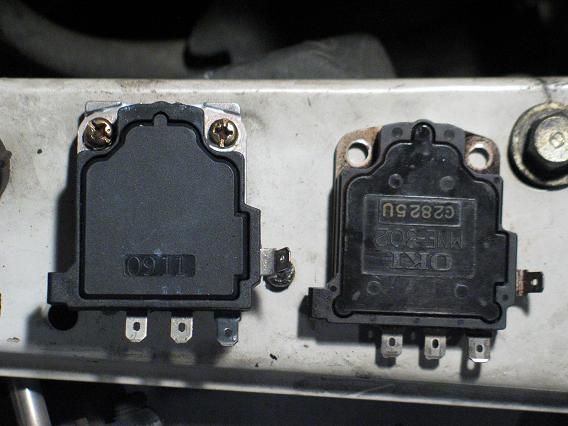
I tried restarting the car, everthing sounded fine, I had electrical power, the starter ran and the engine would turn over, but I could not get combustion. I couldn’t hear the fuel pump kick in so I suspected that it may be the problem. I had the car towed home.
At home I tried starting the car again, I saw the same results; however, I could now hear the fuel pump – I couldn’t hear it earlier because I was too close to a noisy highway. To confirm that this wasn’t a fuel related problem, I sprayed some starting fluid into the intake and tried starting the car again – still nothing.
You have to have fuel and spark for an engine to run, I was pretty sure now that fuel was not the problem – so I began to investigate spark related problems. I turned to my two favorite resources on the matter my well worn Haynes 1993 Accord Repair Manual and the internet, specifically http://techauto.awardspace.com.
I checked the spark plugs – no spark, wires, coil to distributor wire and the coil – no spark anywhere. I checked for voltage to the coil, it was there – I suspected the coil had gone bad at this point and removed it since it was easy to get out, but feeling a little unsure about the solution, I researched the problem some more.
I checked the ecu codes, they pointed to the ignition system. I replaced the coil and performed some more testing. Some of the tests I needed to perform were to look for voltage pulses, I had read that a multimeter is not reliable enough to properly identify on off pulses – I would need a test light. Since I didn’t have a testlight, I created one from some wires and the lightbulb from the driver side door.
I used my new homemade testlight to test the injectors, they worked, this also told me the ecu was good, which is what I suspected since other systems seemed to work fine.
Using my multimeter and the testlight, I performed a couple of different tests on the coil. All of these further tests pointed to the ignition control module, which I learned is inside the distributor.
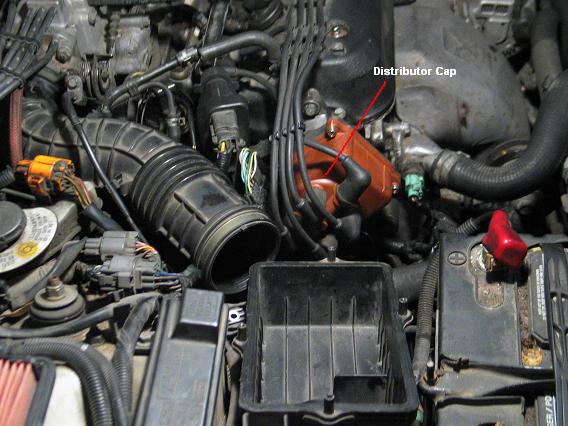
I pulled off the cap and rotor, and found the screws holding in the ignitor, I promptly tried loosening them, but they wouldn’t budge, I decided I would try removing the distributor since doing so would make it much easier to get to the ignitor. I marked the distributor’s location so that I could put it back in exactly the same way and avoid having to turn the engine to top dead center to realign everything. I took out the bolts holding the distributor in and tried to pull the distriburot out – the distributor wouldnt budge. I refocused on getting the ignitor out – I removed the air filter box, this allowed me to more easily get a good screwdriver on the screws holding the ignitor in place. With the good screwdriver I was quickly able to further damage a the screwheads, but still didn’t get the thing out. I had plenty of room with the filter box out, so I tried hammering on the screwdriver and using some lubricating oil on the screws. About this time I noticed the distributor had come loose, I changed plans again and pulled the distributor out.
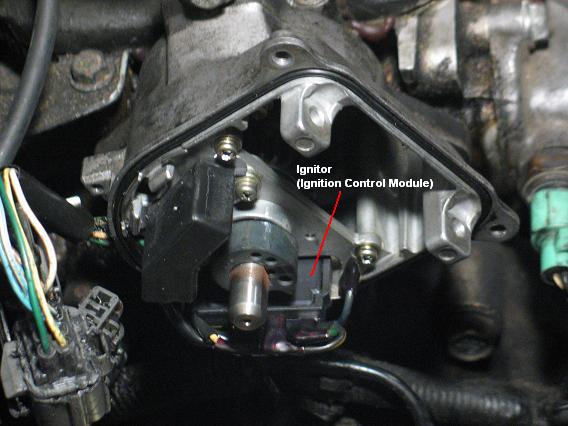
With the distributor out, I was able to take a hacksaw to the ignitor screws and improve them, turning the damaged philips heads into nice big flatheads. I then used my screwgun to promptly remove them.
I pulled the ignitor out and got a new one and some replacement screws at the auto parts store, I put the new one in, reassembled everything, said a prayer and tried starting the car again. Vroooom, my good old Honda started right back up.

I do believe all the concepts you’ve offered on your post. They’re
very convincing and will definitely work. Still,
the posts are very quick for newbies. Maybe just please extend them a little next time?
Thanks for the post.